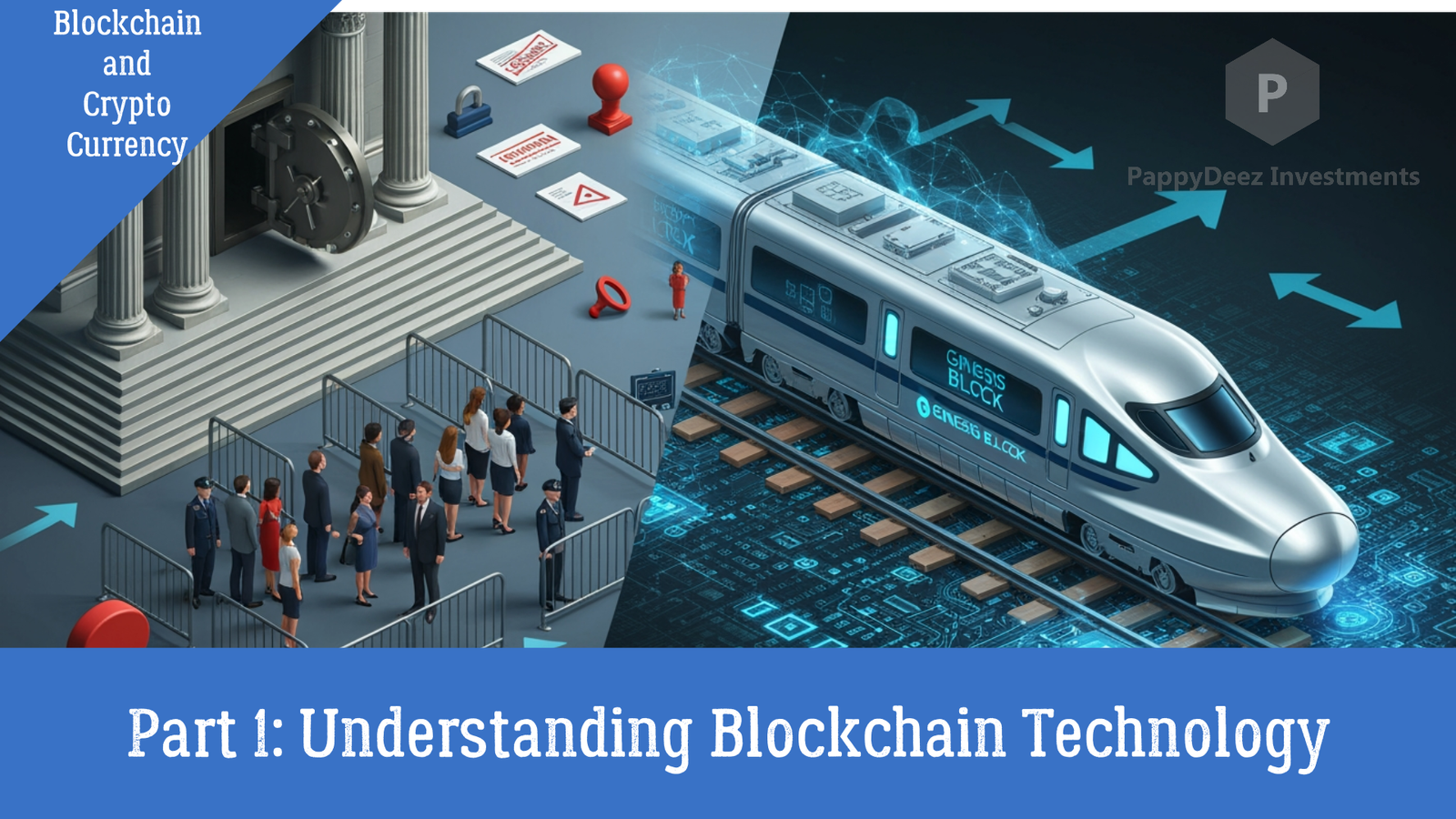
Part 1: Understanding Blockchain Technology
What is a Blockchain?
Imagine a notebook that tracks every transaction ever made. Now imagine that this notebook is:
- Shared with thousands of people around the world
- Transparent so everyone can read it
- Permanent so nothing can be erased or changed
- Decentralized so no single person or company controls it
That's essentially what a blockchain is—a digital ledger that records information in a way that makes it extremely difficult to hack, cheat, or alter.
How Does a Blockchain Work?
Think of a blockchain like a train made up of connected cars:
Blocks
Each "car" in the train is called a block. A block contains:
- Transaction data (who sent what to whom)
- A timestamp (when it happened)
- A unique code called a "hash" (like a fingerprint)
- The hash of the previous block (linking it to the chain)
The Chain
Each new block connects to the previous one, creating a permanent chain of information that stretches back to the very first transaction.
Network of Computers
Thousands of computers around the world maintain copies of the blockchain, verifying new transactions and ensuring no one can cheat the system.
Why is Blockchain Revolutionary?
Traditional System
- Banks control your money
- Transactions require intermediaries (banks, payment processors)
- You need to trust these institutions
- They can freeze your account or reverse transactions
Blockchain System
- You control your own assets
- Transactions happen directly between people (peer-to-peer)
- The system itself ensures trust through mathematics and cryptography
- Transactions are permanent and transparent