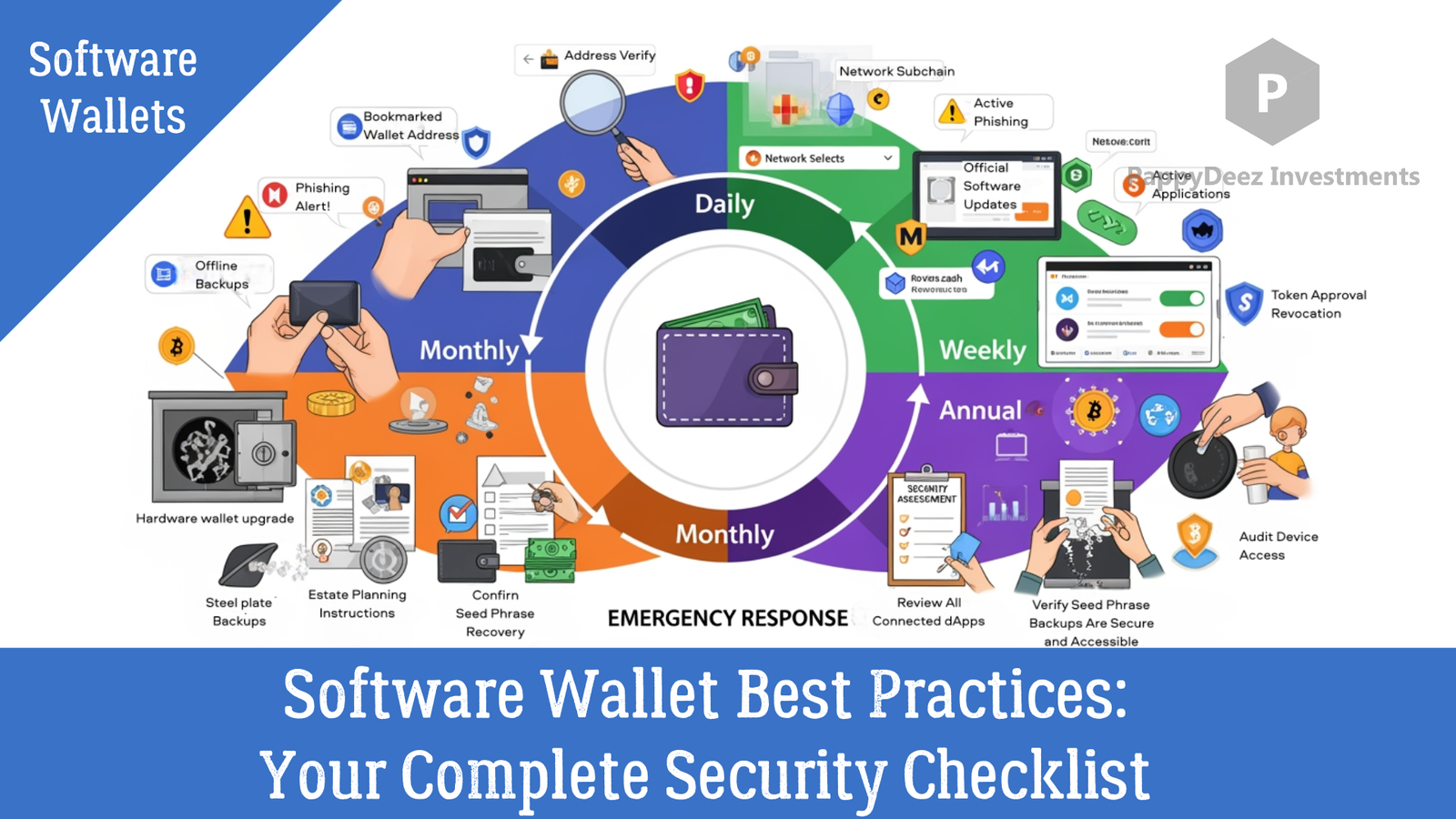
Software Wallet Best Practices: Your Complete Security Checklist
Daily, weekly, monthly, and annual practices for maintaining wallet security
Cryptocurrency security isn't a one-time setup—it's an ongoing practice. Just as you wouldn't set up a home security system and never check it again, your software wallet requires regular attention and maintenance. This guide provides a comprehensive schedule of security practices and outlines your path forward as a confident cryptocurrency user.
Daily Practices: Building Security Habits
Always Verify Addresses Before Sending
Make this an automatic habit—never click send without checking the recipient address. Verify at least the first and last 4-6 characters match what you expect. For large transactions, check the entire address character by character.
Clipboard malware that replaces addresses is real and common. Those few seconds of verification could save thousands of dollars.
Use Bookmarks for Frequently Accessed Sites
Never access your wallet or cryptocurrency exchanges by clicking links in emails or search results. Create bookmarks for every site you use regularly and access them only through these bookmarks.
This single practice eliminates the vast majority of phishing attempts. Attackers can't trick you with a fake URL if you never type or click URLs.
Check Network Selection Before Transactions
Before every send or receive operation, verify you're on the correct blockchain network. This becomes second nature quickly, but skipping this check even once can result in lost funds.
Different networks appear identical in wallet interfaces—only the network selector reveals the difference.
Keep Small Amounts in Software Wallets Only
Resist the temptation to keep large holdings in convenient software wallets. Think of your software wallet as your regular wallet for everyday spending, not a vault for life savings.
As your holdings grow, regularly transfer excess amounts to more secure storage (hardware wallets or cold storage).
Stay Alert for Phishing Attempts
Maintain healthy skepticism about any unsolicited messages, urgent security warnings, or too-good-to-be-true opportunities. Phishing attacks evolve constantly, but they almost always include urgency, promises of easy money, or requests for sensitive information.
When in doubt, navigate to the official website through your bookmarks and check for announcements there.
Weekly Practices: Regular Security Audits
Review Transaction History
Spend a few minutes each week reviewing your transaction history for anything suspicious or unexpected. Small unauthorized transactions often precede larger attacks.
Look for transactions you don't recognize, unexpected approvals, or interactions with smart contracts you didn't authorize.
Check for Wallet and System Updates
Software updates aren't just about new features—they often contain critical security patches. Check for updates to your wallet software, operating system, browser (for extension wallets), and security software.
Install updates promptly, but always download from official sources. Fake update notifications are a common attack vector.
Audit Approved Token Spending Permissions
Visit Revoke.cash or similar services to review which smart contracts have permission to spend your tokens. This list grows every time you interact with a new DeFi platform.
Revoke approvals for platforms you no longer use. These old approvals remain active indefinitely and could be exploited if a platform is compromised.
Back Up Any New Wallet Addresses
If you've created new wallets or generated new addresses, ensure they're documented in your secure address book. Include notes about the purpose of each wallet to avoid confusion later.
This practice becomes crucial when managing multiple wallets for different purposes.
Monitor Cryptocurrency News for Security Alerts
Stay informed about major security incidents, newly discovered vulnerabilities, or active scam campaigns. Following reputable cryptocurrency security accounts on social media provides early warning of emerging threats.
Knowledge of current attack methods helps you recognize and avoid them.
Monthly Practices: Deep Security Reviews
Review All Connected dApps
Log into your wallet and review all connected decentralized applications. Disconnect from apps you no longer use or don't recognize.
Active connections allow these applications to request transactions, which could be exploited if an application is compromised.
Verify Seed Phrase Backups Are Secure and Accessible
Check that your physical seed phrase backups are still where you left them, haven't deteriorated, and are still readable. This isn't about reading them frequently—it's about ensuring they'll be there when needed.
For metal backups, verify they haven't been damaged. For paper backups, check for fading or water damage.
Audit Which Devices Have Access to Your Wallets
Review which devices have your wallet installed and ensure all are still secure. Remove wallet software from devices you no longer use or that might be compromised.
For browser extension wallets, verify you're only logged in on browsers you actively use.
Update All Software and Operating Systems
Beyond weekly update checks, perform a comprehensive update of all software monthly. This includes firmware updates for hardware devices, browser updates, and security software definitions.
Outdated software is one of the most common security vulnerabilities.
Review Your Security Practices and Adjust as Needed
Cryptocurrency security is not static. New threats emerge, your holdings change, and your usage patterns evolve. Monthly reviews help you adapt your security measures to your current situation.
Ask yourself: Have my holdings grown enough to warrant stronger security? Are there new tools or practices I should adopt? Am I following all my own security rules consistently?
Annual Practices: Major Security Assessments
Consider Transferring Long-Term Holdings to Hardware Wallet
At least once a year, honestly assess whether your security setup matches the value of your cryptocurrency. If your software wallet holdings have grown significantly, it's time to invest in a hardware wallet.
The $50-$200 cost of a hardware wallet is negligible compared to the value it protects.
Review and Update Emergency Access Plans
If something happens to you, could trusted family members access your cryptocurrency? Do they know where to find your seed phrases? Do they understand the basics of wallet recovery?
Annual reviews of estate planning for cryptocurrency ensure your assets aren't lost if something unexpected happens.
Verify Physical Seed Phrase Backups Haven't Degraded
Paper backups can fade over time, especially if stored in less-than-ideal conditions. Annually verify your backups are still readable and consider refreshing paper backups or upgrading to metal solutions.
This is also an opportunity to add backup locations if your situation has changed.
Educate Trusted Family Members on Recovery Process
If appropriate for your situation, annually review basic cryptocurrency recovery with trusted family members. They don't need to know your seed phrases, but they should understand the general process and where to find instructions if needed.
This is especially important as holdings grow or as you age.
Reassess Your Cryptocurrency Security Strategy
Step back and look at your entire cryptocurrency security picture annually. Are you using the right types of wallets? Is your risk appropriately distributed? Have new security tools or practices emerged that you should adopt?
This big-picture review catches issues that daily or monthly practices might miss.
Your Software Wallet Journey
You've now completed a comprehensive education in software cryptocurrency wallets. You understand the different types and their use cases, how to set up and configure wallets securely, critical security practices for protecting your assets, how to interact safely with DeFi and dApps, common mistakes and how to avoid them, and when to upgrade to more secure storage solutions.
Moving Forward: Start Small
Begin your journey with small amounts you can afford to lose. Make your inevitable mistakes while the stakes are low. Build confidence gradually through actual experience, not just reading.
Every transaction, every interaction with a new platform, every recovery test builds your competence and confidence.
Continue Learning
Cryptocurrency technology and security practices evolve rapidly. Join cryptocurrency communities on Reddit, Discord, or Telegram. Follow security experts and reputable news sources on social media. Stay updated on best practices through blogs and tutorials. Learn from others' experiences—both successes and failures.
The cryptocurrency community is generally helpful to newcomers who ask questions and demonstrate willingness to learn.
Upgrade When Ready
As your holdings grow and your comfort level increases, upgrade your security measures. Transition from custodial to non-custodial wallets for true ownership. Move from software wallets to hardware wallets for significant holdings. Regularly reassess your security needs as your situation changes.
Security should scale with the value you're protecting.
Final Thoughts
Software wallets are powerful tools that give you unprecedented control over your financial future. They embody the core principle of cryptocurrency: being your own bank. With proper security practices and continued education, you can use them safely and effectively.
Remember these core principles:
Security is a process, not a destination. You never "finish" securing your cryptocurrency—you maintain and adapt your security practices over time.
Never stop learning. The cryptocurrency space evolves rapidly. What's secure today might be vulnerable tomorrow. Stay informed and adapt.
When in doubt, be cautious. Taking an extra day to research before interacting with a new platform has never caused anyone to lose funds. Rushing in without understanding has cost many people dearly.
Your cryptocurrency is only as secure as your weakest security practice. A dozen strong security measures can be undone by one weak link—storing your seed phrase digitally, using public Wi-Fi, or falling for a phishing scam.
Quick Reference Card
Emergency Checklist:
✅ Seed phrase backed up in multiple secure locations
✅ Strong, unique passwords for all accounts
✅ Two-factor authentication enabled where available
✅ Bookmarks for all legitimate wallet sites
✅ Only official wallet apps installed
✅ Regular software updates scheduled
✅ Address book populated with verified addresses
✅ Test transactions before large transfers
✅ Network selection verified before sending
✅ Recovery process tested and understood
Red Flags (Stop Immediately If You See These):
🚩 Someone asking for your seed phrase or private keys
🚩 Guaranteed returns or "double your crypto" offers
🚩 Pressure to act immediately or miss out
🚩 Suspicious URLs or misspellings in web addresses
🚩 Unsolicited "customer support" messages
🚩 Requests to "verify" or "synchronize" your wallet
🚩 Too-good-to-be-true investment opportunities
🚩 Apps or websites you didn't intentionally visit
Good luck on your cryptocurrency journey. May your transactions be swift, your storage be secure, and your financial sovereignty be absolute!
Continue your cryptocurrency education with Part 6: Software Cryptocurrency Wallets: Your Complete Introduction and Journey Summary